
Brian Chesky AI comments are trending again this week. The Airbnb CEO once said two types of people will not make the shift to AI: pure people managers and people who refuse to change. A wave of articles on 25 October 2026 put that line back in the news.
The quote is not brand new, though. Chesky said it in May 2026. In this guide, we explain exactly what he said, the context behind it, how Airbnb itself uses AI today, and what any worker can take from it.
What Brian Chesky said about AI and work
Chesky made the remarks on the Invest Like the Best podcast with host Patrick O’Shaughnessy. The episode, called AI Founder Mode, came out on 5 May 2026. Fortune covered it two days later.
In short, his main line was clear. He said the two types of people who will not make the shift to AI are “pure people managers” and people who are rigid and do not want to change. He added that he does not think people managers will have any value in the future.
The comments returned on 25 October 2026 when several sites, such as Rolling Out, shared them again, and searches for his name rose on Google Trends the same weekend.
The first group: pure people managers
By pure people managers, Chesky means bosses whose whole job is to oversee others rather than direct the work itself. In practice, that often means running meetings, tracking headcount and passing messages up and down.
He was not attacking mentoring or caring about a team. Instead, he argued that good leaders should be close to the work itself. Fortune reported that he pointed to former Apple design chief Jony Ive as an example of someone who led a team while staying deep in the craft.
In other words, AI makes it easier to share information and track tasks. So a manager who only does those things has less to offer. A manager who also knows the product well becomes more valuable.
The second group: people who will not change
The second group is about mindset, not job title. Chesky said people who are rigid and do not want to evolve will struggle. AI tools change fast, and workers who avoid them will fall behind those who learn them.
The good news, according to Fortune’s summary, is that he sees the tools as incredibly easy to master for people with a growth mindset. For this reason, that point matters. You do not need a new degree to adapt. Instead, you need the habit of trying new tools at work.
How Airbnb uses AI today
In fact, Chesky’s views make more sense when you look at his own company. Here are the key facts from his public comments this year:
- AI writes much of the code. On its first quarter 2026 earnings call, Airbnb said about 60% of the code its engineers produced was written by AI, as TechCrunch reported.
- AI handles support. Airbnb said AI now resolves about 40% of support issues without a human. Other reports give slightly different figures.
- AI search is live. On 30 September 2026, Airbnb began rolling out AI search, starting in the US. Guests can type or speak what they want, and the app builds filters, highlights matching features and compares saved homes.
- A strong opinion. In February 2026, Chesky told CNBC that from a business view, AI is the best thing that ever happened to Airbnb.
He has also said consumer AI is not finished yet. In a TechCrunch interview around the search launch, he explained that adding AI search without hurting the conversion rate is the hard part. In a separate interview on 1 October, he argued that AI agents need their own operating system, because today’s phones and PCs were not built for them. Our guide on what an AI agent is explains why that idea keeps coming up.
Free: AI Tools Cheat Sheet 2026
24 free tools sorted by task, a simple prompt formula and 10 prompts you can copy. We send the PDF straight to your inbox.
Sent! Check your inbox
We emailed the AI Tools Cheat Sheet to you. Not there in 2 minutes? Look in Spam or Promotions.
How his view compares to other tech leaders
Chesky is not alone in talking about AI and jobs. However, his take is less gloomy than some. Several leaders have suggested AI could take over large parts of office work within a few years. Chesky’s message is closer to this: AI changes how work is done, and people who adapt will be fine.
Other CEOs have shared their own big predictions this month. For example, Google DeepMind’s Demis Hassabis talked about when general AI might arrive, which we covered in our guide to Demis Hassabis on AGI.
What workers can learn from the Brian Chesky AI comments
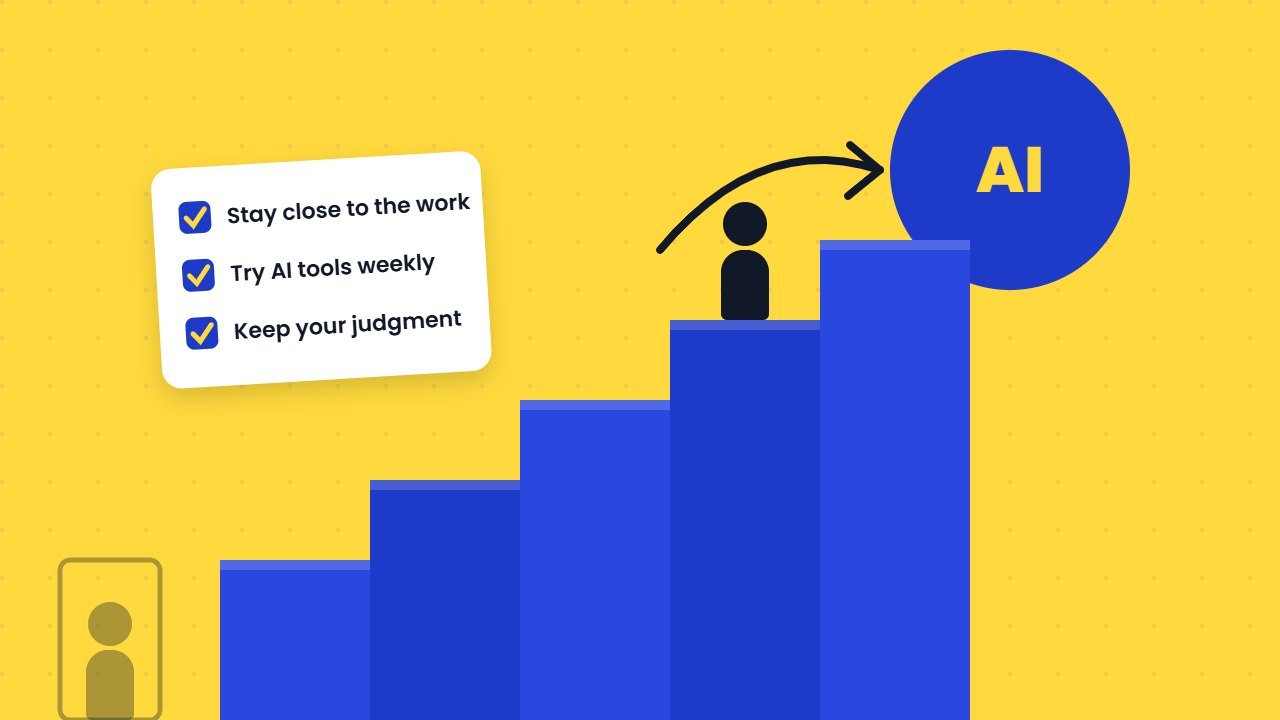
Whether you agree with Chesky or not, his points give a useful checklist:
- Stay close to real work. If you manage people, keep a hand in the product, the code, the design or the customer.
- Use AI tools every week. Pick one task, such as notes, research or first drafts, and try an AI tool for it. Our list of free AI tools like ChatGPT is a good place to start.
- Learn by doing, not by waiting. After all, new features arrive monthly. Small, regular practice beats one big course.
- Keep your judgment. AI speeds up work, but people still decide what good looks like. Taste and care stay human strengths.
- Automate the boring parts. Usually, repeated tasks are the easiest wins. Our guide to AI automation for small business shows simple examples.
A fair reading of the debate
Some readers felt the comments were harsh on managers. That is a fair reaction. After all, many managers do much more than oversee. They coach, protect teams and solve conflicts, which AI cannot do. Chesky himself said check ins and team care still matter.
Still, his wider point holds up for many jobs. As a result of AI, roles that only move information between people are shrinking. At the same time, roles that combine skill, judgment and people care are growing.
Frequently asked questions
What did Brian Chesky say about AI?
He said the two types of people who will not make the shift to AI are pure people managers and people who are rigid and do not want to change. He made the comment on the Invest Like the Best podcast in May 2026.
Is the Brian Chesky quote new?
No. It is from an episode released on 5 May 2026. It started trending again on 25 October 2026 after several sites shared it.
How much of Airbnb’s code is written by AI?
Airbnb said about 60% of the code its engineers produced in the first quarter of 2026 was written by AI.
Does Airbnb have AI search?
Yes. Airbnb began rolling out AI search on 30 September 2026, starting in the US. It lets guests describe a trip in text or voice and builds filters for them.